In the absence of a new Deus Ex, indie imsim Tokyo Walled City may scratch that stealth 'n' stolen passwords itch
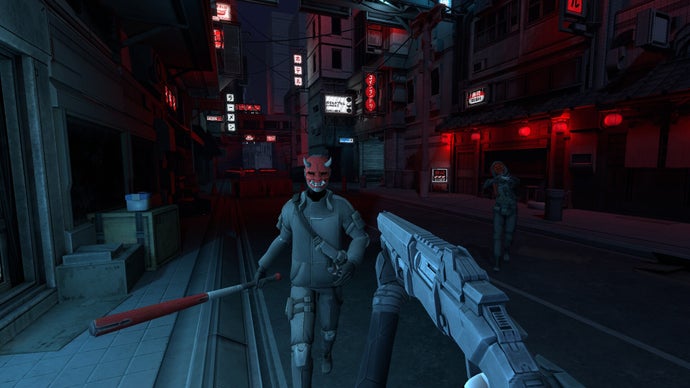
The gaming landscape has been waiting for a true spiritual successor to Deus Ex for nearly two decades, a genre-defining blend of stealth, social engineering, and cyberpunk grit that has stubbornly refused to spawn from AAA studios. Instead, we are currently witnessing a quiet revolution emerging from the bustling, fluorescent-lit corridors of TGS 2026. From this scene emerges Tokyo Walled City, a project by the indie outfit Grim Ronin that promises a "stealth action retro-cyberpunk immersive sim with survival horror and RPG elements." It is a bold declaration of intent, especially in an industry where "immersive sim" is often used as a marketing buzzword before dissolving into generic third-person action.
What makes this announcement genuinely exciting is the specific fusion of mechanics at play. Most modern stealth games have abandoned the nuance of Deus Ex for the safety of a combat-heavy engagement loop, yet Tokyo Walled City explicitly targets that "stolen passwords" itch. This refers to the ability to manipulate systems, hack terminals, and use environment mastery to bypass conflicts rather than just shouting them down. In a genre where AI pathfinding often fails to support complex non-lethal strategies, a retro-cyberpunk setting offers a natural sandbox for these tactics, allowing players to utilize the very neon-soaked, rain-slicked streets as both a shield and a weapon.
The survival horror elements add a necessary layer of tension that distinguishes this from the standard cyberpunk fare that often glosses over the cost of existence in a high-tech dystopia. Grim Ronin appears to be crafting an atmosphere where the city itself is a hostile entity, one that reacts to the player's choices with visceral consequences. This is crucial because the best immersive sims, from Dishonored to System Shock, derive their power from a world that feels alive and reactive. If the streets of this walled Tokyo are truly dynamic, responding to the player's stealth failures or hacking successes, then the genre has finally found a new heartbeat outside the shadow of its titans.
We must approach this title with a critical eye, however, as the comparison to Gloomwood is inevitable. While Gloomwood attempted to mix horror and stealth, it ultimately faltered under the weight of its own mechanics and a lack of cohesive narrative drive. The success of Tokyo Walled City will hinge on whether Grim Ronin can avoid those pitfalls by prioritizing systemic depth over linear storytelling. The promise of an independent imsim is that it can take risks on level design and puzzle architecture that larger budgets cannot justify, potentially offering a more fluid and intuitive experience for the player.
Ultimately, the arrival of Tokyo Walled City represents a hopeful signal for the future of the immersive sim genre. It suggests that the tools to create a Deus Ex-worthy experience do not require a billion-dollar budget, but rather a deep respect for the mechanics of interaction and a willingness to embrace the weird, beautiful chaos of a retro-futuristic Tokyo. As we watch the buzz from TGS 2026 settle into actual development milestones, the anticipation is palpable. We are seeing proof that there is still room for games that ask us to think, to plan, and to navigate a digital world not just as a soldier, but as a ghost in the machine.
On Bluesky? Meet HomeSky.
Follower analytics, a growth toolkit, scheduling and AI posting — built for Bluesky. Connect your account and use everything free for 60 days.
Try HomeSky free →