South Tyrol’s Bunkers Shoulder WWII History in Vincenzo Pagliuca’s Portraits
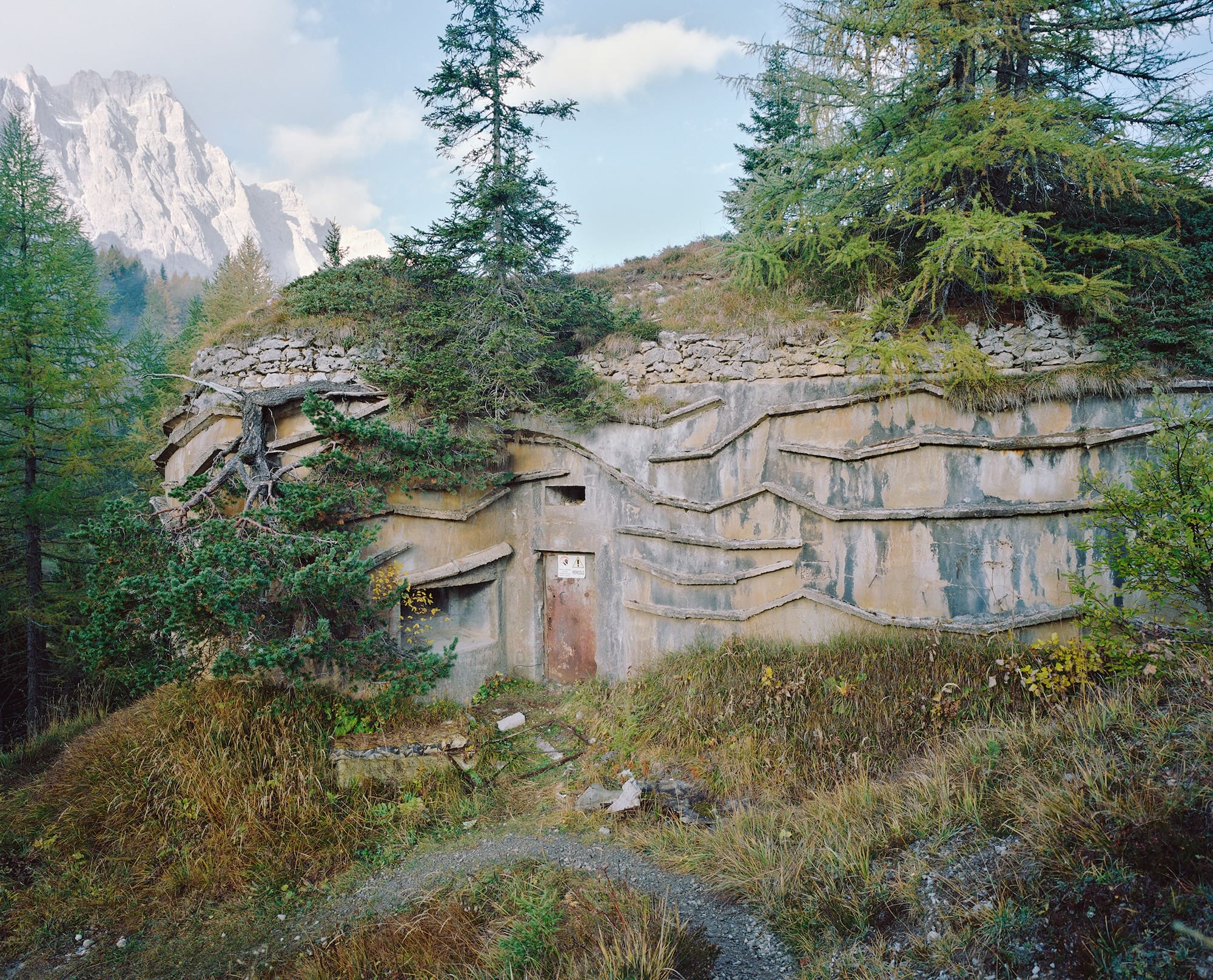
High in the jagged crags of South Tyrol, where the air is thin and the granite scars of glacial retreat still dominate the landscape, a hidden chapter of history waits to be read in stone. Vincenzo Pagliuca, a photographer with an eye for the structural poetry of abandonment, has turned his lens toward the brutalist remnants of World War II. These are not merely fortified positions; they are frozen moments of human desperation, built in a race against time by soldiers who imagined a future that never came. Pagliuca's work does more than document ruins; it interrogates the relationship between the land and the violence imposed upon it, revealing how nature slowly reclaims the architectural arrogance of war.
The bunkers scattered across these Italian Alps were part of a desperate defensive line constructed in the late 1930s and early 1940s. Built with a mix of concrete and local stone, they were designed to withstand artillery fire and hold the line against advancing forces. Yet, the passage of eight decades has transformed their function. The machine guns are gone, the barbed wire has rusted into silent ornaments, and the interiors, once echoing with the frantic shouts of command, now hold the quiet weight of snow and silence. Pagliuca captures this transition with a clinical precision that highlights the stark contrast between the organic flow of the mountain and the rigid, geometric imposition of military engineering.
What makes these portraits particularly compelling is their refusal to offer easy sentimentality. While many photographers seek to evoke nostalgia or horror in such subjects, Pagliuca presents the bunkers as architectural artifacts, almost as if they were temples to a forgotten faith. The composition of his shots often frames the structures against vast skies or dense forests, forcing the viewer to confront the scale of human effort relative to the indifference of the natural world. In this light, the bunkers become less about the specific battles fought within them and more about the universal human impulse to build shelters against the inevitable decay of time.
This artistic exploration matters because it preserves a memory that is often erased from popular discourse. In the decades following the war, these structures were often left to crumble or repurposed without regard for their historical significance. By focusing on the aesthetic and structural integrity of the bunkers, Pagliuca invites a deeper engagement with the history of the region, one that transcends political borders and focuses on the shared human experience of conflict and survival. His images serve as a visual archive, ensuring that the physical evidence of this turbulent period remains visible and tangible for future generations.
Ultimately, the work of Vincenzo Pagliuca in South Tyrol is a testament to the power of independent visual storytelling. It reminds us that history is not just a series of dates and names, but a landscape of enduring physical forms that continue to shape our understanding of the past. As these structures stand shoulder-to-shoulder with the mountains, they invite us to reflect on the fragility of empires and the resilience of the earth. This is a story of architecture and memory, told through the lens of an artist who sees the extraordinary in the overlooked ruins of a bygone era.
On Bluesky? Meet HomeSky.
Follower analytics, a growth toolkit, scheduling and AI posting — built for Bluesky. Connect your account and use everything free for 60 days.
Try HomeSky free →